19-20真题
自操作表,指表中元素被find函数访问到,就自动移动到表头,并保持其他元素顺序不变
- 用数组存储结构写find功能
- 写链表存储结构的find功能
1
2
3
4
5
6
7
8
9
10
11
12
13
14
15
16
17
18
19
20
21
22
23
24
25
26
27
28
29
30
31
32
| void Find(char a[],int n,char e){
for(int i=0;i<n;i++){
if(a[i]==e){
for(int j=i-1;j>=0;j--){
a[j+1]=a[j];
}
a[0]=e;
}
}
}
struct LNode{
char data;
struct LNode *next;
};
void Find(LNode *L,char e){
LNode *p=L->next,*q=L;
while(p!=NULL&&p->data!=e){
p=p->next;
q=q->next;
}
if(p->data==e){
q->next=p->next;
p->next=L->next;
L->next=p;
}else{
cout<<"所要查找的结点不存在!!"<<endl;
}
}
|
2. 只用一个二叉树根节点指针T,用高效率方法,计算
- 所有结点个数
- 所有叶子结点个数
- 所有满结点个数/所有满状态结点个数
1
2
3
4
5
6
7
8
9
10
11
12
13
14
15
16
17
18
19
20
21
22
23
24
25
26
27
28
29
30
31
32
33
34
35
36
37
|
struct TBTNode{
char data;
int ltag,rtag;
struct TBTNode *lchild;
struct TBTNode *rchild;
}
void Tnorder(TBTNode *T){
int a=0,b=0,c=0;
for(TBTNode *p=Frist(T);p!=NULL;p=Next(p)){
a++;
if(p->ltag==1&&p->rtag==1)
b++;
if(p->ltag==0&&p->rtag==0)
c++;
}
cout<<"所有结点个数:"<<a<<endl;
cout<<"叶子结点个数:"<<b<<endl;
cout<<"满状态结点个数:"<<c<<endl;
}
TBTNode *Frist(TBTNode *p){
while(p->ltag==0){
p=p->lchild;
}
return p;
}
TBTNode *Next(TBTNode *p){
if(p->rtag==0)
return Frist(p->rchild);
return p->rchild;
}
|
简述如何不用递归实现归并排序,并实现过程
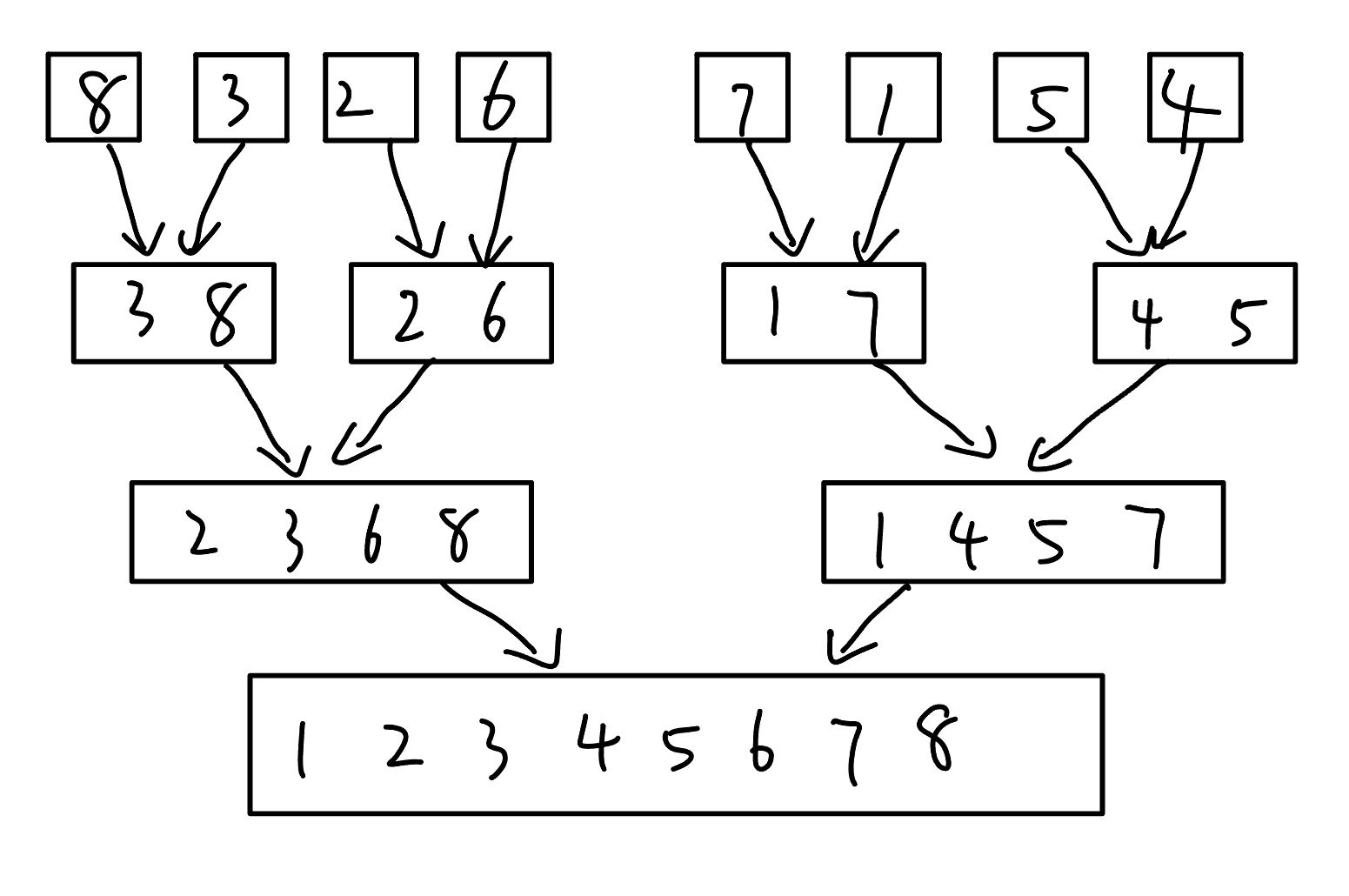
1
2
3
4
5
6
7
8
9
10
11
12
13
14
15
16
17
18
19
20
21
22
23
24
25
26
27
28
29
30
31
32
33
34
35
36
37
38
39
40
41
42
43
44
45
46
47
48
49
50
51
52
53
54
55
56
57
58
59
60
61
62
63
64
65
|
#include<iostream>
#include<algorithm>
using namespace std;
#define maxn 100
int num[maxn];
template<class Type>
void Merge(Type a[],Type b[],int left,int mid,int right){
int i=left;
int j=mid+1;
int k=left;
while(i<=mid&&j<=right){
if(a[i]<a[j])
b[k++]=a[i++];
else
b[k++]=a[j++]
}
if(i>mid)
for(int z=j;z<=right;z++)
b[k++]=a[z];
else
for(int z=i;z<=mid;z++)
b[k++]=a[z];
}
void MergePass(Type x[],Type y[],int s,int n){
int i=0;
while(i+2*s-1<n){
Merge(x,y,i,i+s-1,i+2*s-1);
i+=2*s;
}
if(i+s<n)
Merge(x,y,i,i+s-1,n-1);
else
Merge(x,y,i,i,n-1);
}
template<class Type>
void MergeSort(Type c[],int n){
Type *d=new Type[n];
int s=1;
while(s<n){
MergePass(c,d,s,n);
s+=s;
MergePass(d,c,s,n);
s+=s;
}
delete[] b;
}
int main(){
int n;
while(cin>>n){
for(int i=0;i<n;i++)
cin>>num[i];
MergeSort(num,n);
for(int i=0;i<n;i++)
cout<<num[i]<<endl;
}
return 0;
}
|
实现输入n个0 ~ 1000的整数,n属于0 ~ 1000输出这些整数及他们的出现次数。输出到文件”out.txt”。输出顺序按照出现次数由大到小,次数相同时,数值小的在前
输入
12
5 3 3 4 5 6 8 7 9 6 4 3
输出
3 3,4 2,5 2,6 2,7 1,8 1,9 1
1
2
3
4
5
6
7
8
9
10
11
12
13
14
15
16
17
18
19
20
21
22
23
24
25
26
27
28
29
30
31
32
33
34
35
36
37
38
39
40
41
42
43
44
45
46
47
48
49
50
51
52
53
54
55
56
57
58
59
60
61
62
63
64
65
66
67
68
69
70
71
72
73
74
75
76
77
78
79
80
81
82
83
84
85
86
| #include<stdio.h>
typedef struct E{
int data;
int times;
}E;
void tongji(int a[],int n){
E arr[1000],m;
arr[0].data=a[0];
arr[0].times=1;
int i=1,j=0;
int p=0,q=0,r=0;
for(int s=1;s<1000;s++){
arr[s].times=-1;
}
while(i<n){
j=0;
while(a[i]!=arr[j].data&&arr[j].times!=-1) j++;
if(arr[j].times==-1){
arr[j].data=a[i];
arr[j].times=1;
p=j,q=j;
while(arr[p].times>arr[p-1].times&&p>0){
m=arr[p];
arr[p]=arr[p-1];
arr[p-1]=m;
p--;
}
while(arr[q].times==arr[q-1].times&&arr[q].data<arr[q-1].data&&q>0){
m=arr[q];
arr[q]=arr[q-1];
arr[q-1]=m;
q--;
}
}
else{
arr[j].times++;
p=j,q=j;
while(arr[p].times>arr[p-1].times&&p>0){
m=arr[p];
arr[p]=arr[p-1];
arr[p-1]=m;
p--;
}
while(arr[q].times==arr[q-1].times&&arr[q].data<arr[q-1].data&&q>0){
m=arr[q];
arr[q]=arr[q-1];
arr[q-1]=m;
q--;
}
}
i++;
if(r<j) r=j;
}
FILE *fp;
fp=fopen("example.txt","w");
for(int i=0;i<=r;i++)
fprintf(fp,"%d %d",arr[i].data,arr[i].times);
fclose(fp);
}
int main(){
int n,i;
bool flag=true;
cin>>n;
if(n<0||n>1000)
cout<<"输入错误!"<<endl;
else{
int arr[100];
for(i=0;i<n;i++) cin>>arr[i];
for(i=0;i<n;++i){
if(arr[i]<0||arr[i]>1000){
flag=false;
break;
}
}
if(flag)
tongji(arr,n);
else
cout<<"输入有误!"<<endl;
}
}
|
5. 堆排序
1
2
3
4
5
6
7
8
9
10
11
12
13
14
15
16
17
18
19
20
21
22
23
24
25
26
27
| #include<stdio.h>
#include<malloc.h>
void sift(int a[],int low,int high){
int i,j;
i=low,j=2*i;
int temp=a[low];
while(j<=high){
if(j<high&&a[j]<a[j+1])j++;
if(temp<a[j]){
a[i]=a[j];
i=j;
j=2*i;
}else
break;
}
a[i]=temp;
}
void HeapSort(int a[],int n){
int temp;
for(int i=n/2;i>0;i--)sift(a,i,n);
for(int i=n;i>=2;i--){
temp=a[1];
a[1]=a[i];
a[i]=temp;
sift(a,1,i-1);
}
}
|

 微信
微信 支付宝
支付宝